Akash Gogate
Exploring the space where systems think and biology inspires.
From satellite observation scheduling at Leidos to LLM pipelines for cancer biology.
CS + Biology at UW-Madison | Computing for biology's next frontier.
Hi, I'm Akash.
I'm a CS + Biology student at UW-Madison, graduating in May 2028. Right now I'm building LLM agent pipelines for spatial transcriptomics research at the Kendziorski Lab, and my industry experience has been in backend infrastructure and distributed systems at Leidos.
I grew up in Princeton, NJ, where I spent a lot of time on tennis courts (still do). I've coached players and run tournaments. The stringing business came out of that too. That's where I learned that most interesting problems look messier up close than from a distance, and that knowing the fundamentals is what lets you improvise when things go sideways.
I like getting into the technical details when they actually matter, not just to look impressive. Some problems don't have a shortcut. You actually have to understand what's going on to solve them.
The goal is to build things that need both solid engineering and good design to work, not just one or the other. That's where the most interesting problems are, and where I want to spend my career.
3.8 GPA · Dean's List · CS + Biology, UW-Madison · Graduating May 2028 · Open to Summer 2027 internships & co-ops

Self-Improving LLM Agent
Architected failure-driven self-improvement loop for LLM agents across a 5,000+ task benchmark, outperforming ReAct baseline by 15pp via RAG-enhanced retrieval and Transformer neural network reasoning; built AgentBench + LLM-as-judge eval infrastructure with GitHub Actions CI/CD. Optimized inference via fine-tuning, task horizon tuning, and parameter search; built provider-agnostic serving abstraction supporting end-to-end ML pipeline scaled to horizon 20. Engineered LLM-as-judge harness scoring 7 dimensions; implemented novel repeated_failure_rate metric to quantify self-improvement efficacy.
View on GitHub ↗Where I've worked

Leidos
Software Engineer Intern
May 2025 - Present
Leidos' satellite fleet needed to schedule competing observation requests against a shared set of ground assets, a classic multi-objective optimization problem. I applied dynamic programming and memoization in Python to prototype a scheduling engine, then rewrote the entire engine in Rust once the approach proved out, since the team's production microservice ecosystem demanded stricter reliability and lower latency than a Python service could guarantee at scale.
To keep scheduling decoupled from the rest of the satellite operations stack, I designed an event-driven data pipeline on Kafka with at-least-once delivery semantics, persisting results to MongoDB. That decoupling meant any one service could fail or redeploy without taking down the mission-critical scheduling path around it.
I containerized the team's test suite with Docker and ran it on Kubernetes, wiring the whole thing into GitHub Actions CI/CD. Writing pytest coverage across boundary conditions and deliberate fault injection meant regressions got caught in CI before they ever reached production.
Separately, I built a Claude Code MCP plugin from scratch on top of an institutional knowledge graph mapping the team's ontologies and service dependencies. It now serves roughly 30 engineers across a multi-team defense program, giving them a shared, queryable map of how services relate instead of relying on tribal knowledge.
I also built a solo Android ATAK (tactical mapping) plugin from scratch over four weeks, adding voice-activated situational awareness for field operations. Speech recognition had to run fully offline, on-device, for security, so I integrated a local whisper.cpp model into a command pipeline that classifies spoken reports against two structured formats, a UXO (unexploded ordnance) report and a 9-line MEDEVAC request, then extracts location and threat details from natural speech and plots the result on live tactical maps in about 10 seconds end to end. It hit 100% accuracy on marker-type classification and about 5% average word error rate across both schemas.
I also contributed to the team's distributed media pipeline, a multi-service system spanning MongoDB, S3, a CDN layer, and Kafka for tactical communication media. I owned data ingestion and storage: writing the Kafka consumer that processed incoming topic data, optimizing MongoDB schemas for cleaner data structuring, and building the S3 upload and delete handlers.
Separately, I built a natural-language query tool for aircraft fleet readiness, a React frontend on top of DuckDB for fast analytical SQL and Redis for sub-second caching, so operators could ask plain-English questions about fleet status and get an answer without knowing the underlying schema.
I also extended the team's REST API for querying stored tactical event data, adding five new filter dimensions (unit ID, callsign, event type, time window, and geographic area) while keeping full backward compatibility with the existing endpoints. I documented it in OpenAPI/Swagger and got the new code path to over 90% test coverage.
See more in the Skills section ↗
The Kendziorski Lab, UW-Madison
Student Research Intern
September 2025 - Present
The lab's spatial transcriptomics work spans single-cell RNA sequencing (scRNA-seq), next-generation sequencing (NGS), and spatial transcriptomics data, each of which suits different model architectures. I built an end-to-end ML pipeline in PyTorch and TensorFlow with an agentic layer that automatically selects and evaluates the right model (scVI, scANVI, scGen, or AmortizedLDA) for a given dataset, with every run tracked in Weights & Biases. Tuning that pipeline for scale cut GPU runtime from 80 minutes down to 27 on identical hardware, a roughly 300% reduction that matters when the lab is iterating across dozens of datasets.
Keeping up with clinical genomics literature was its own bottleneck, so I built TransferAgent to automate NLP-based literature synthesis and cross-paper validity scoring across roughly 500 clinical genomics papers. It cut review time by about 60%, and I worked directly with clinicians in the lab to make sure the synthesis reflected clinical relevance, not just statistical significance.
That pipeline work is now feeding into an ongoing clinical genomics publication targeting a peer-reviewed computational biology journal, where I've been validating model performance and pipeline reproducibility for glioblastoma gene therapy research across a 10-person interdisciplinary lab.
See more in the Skills section ↗
Inspirit AI
Machine Learning Research Intern
Sep 2022 - Mar 2023
I built a skin cancer detection pipeline using OpenCV for image preprocessing and scikit-learn (with NumPy/Pandas handling the data wrangling) that reached 95% classification accuracy across roughly 70,000 dermoscopic images. That work became my first published paper, 'Early Skin Cancer Detection Improvement,' through Inspirit AI.
In parallel, I trained and validated a Random Forest classifier on miRNA sequences for cancer cell likelihood prediction, reaching 95% predictive accuracy at p < 0.05, validated with stratified k-fold cross-validation to make sure the result generalized rather than overfitting to one split of the data.
See more in the Skills section ↗

Princeton Racket Club
Tennis Coach & Tournament Director
May 2024 - Aug 2024
I held a dual role as tournament director and head coach at Princeton Racket Club: directing 8 regional tournaments end to end (380+ match entries, every one starting on time) while also coaching 3 classes of 8-10 athletes spanning ages 8 to 65.
On the coaching side, I built data-driven, skill-adapted regimens for individual athletes rather than running one generic program for everyone. That approach guided 3 junior athletes to over 150 regional ranking points combined and helped 5 adult players climb a full 0.5 NTRP competitive level.
See more in the Skills section ↗

Tennis Racket Stringing Services
Founder
Jan 2019 - Present
I founded an independent racket stringing business from scratch and scaled it to 45+ regular clients, servicing 12-20 rackets a month across two service tiers: a standard 3-4 day turnaround and a premium 2-day option for players who needed their racket back fast.
Growing the client base meant leaning on grassroots channels rather than paid marketing: word-of-mouth referrals, flyers at local parks, referral discounts through high school tennis teams, and an Instagram page showcasing the stringing craftsmanship itself.
See more in the Skills section ↗
Recognition & Awards
TEL: Spatial Intelligence Ideathon
UW-Madison
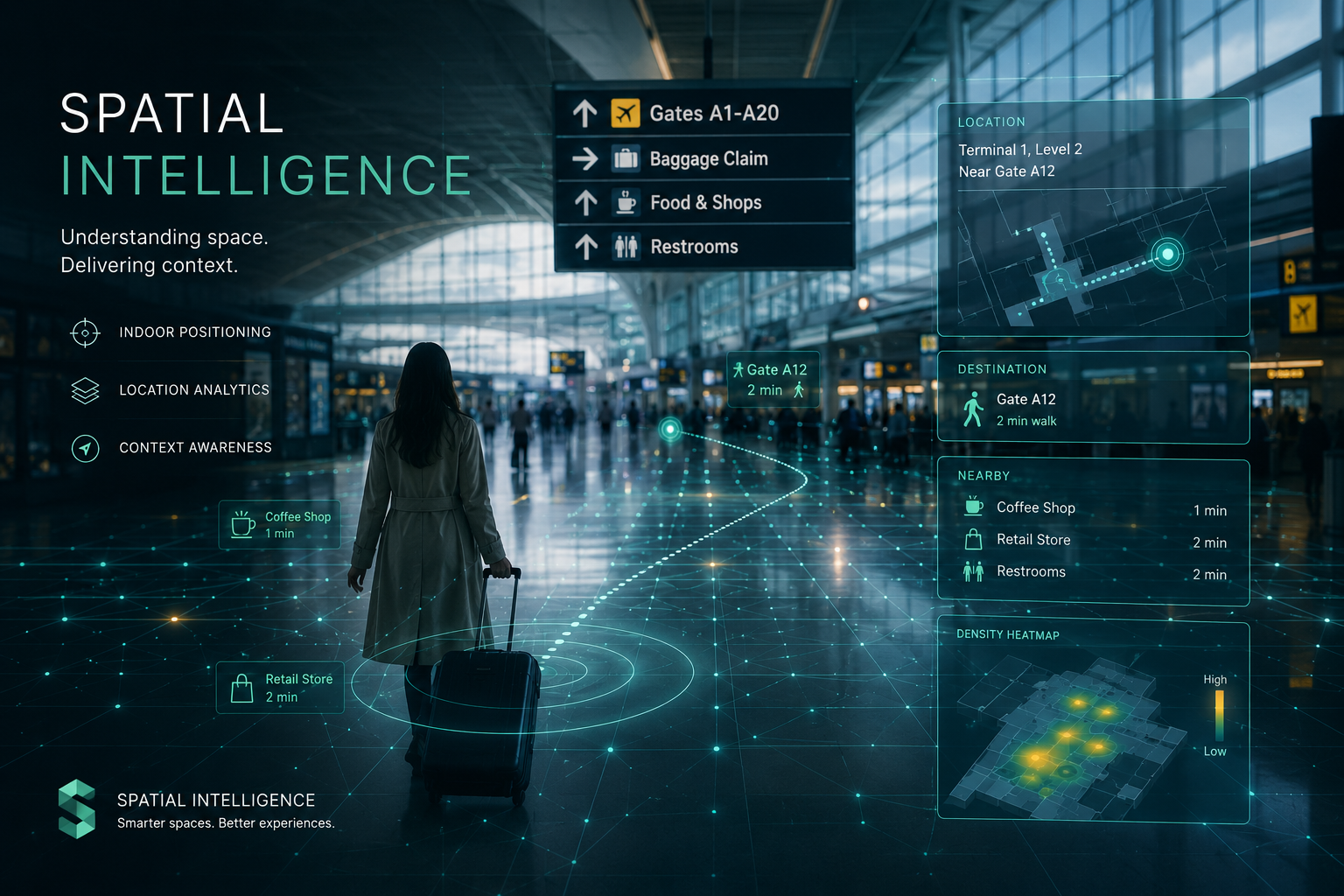
Placed 2nd at a competitive UW-Madison ideathon, pitching a dual-product airport accessibility platform combining ZaiNAr sub-meter indoor positioning with SGA AR spatial computing.
Designed a B2B tool giving airline staff real-time sub-meter wheelchair-passenger tracking between gates, paired with a B2C app letting family track accessible relatives through the terminal.
Want to know more about these? See the Skills section ↗
Things I've built

LLM Agent Pipeline — Spatial Transcriptomics
End-to-end ML pipeline for scRNA-seq, NGS, and spatial transcriptomics. Agentic framework selects and evaluates models across scVI/scANVI/scGen/AmortizedLDA; cut GPU computation 300%.

SAT Practice Test Generator
GPT-4o tutor that finds your weak SAT domains and generates exam-matched practice questions on demand.


Ecological Conservation Game
10,000-agent C++ simulation with spatial hashing and GPU-instanced rendering, sustaining 60+ FPS as bots evolve across generations.

USTA Tournament Explorer
Android app for discovering USTA tennis tournaments with an interactive map, radius filtering, and NTRP skill-level matching.

microRNA Cancer Detection (miRcore)
Random forest classifier on microRNA expression profiles to predict cancer biomarkers. 95% accuracy (p < 0.05).
Always learning.
Here's where I am right now. Picked up most of these through working on real projects, and the list keeps growing.
Languages
Infrastructure
ML & Data
Agentic & LLM
Bioinformatics & Genomics
Developer Tools
Leadership & Product
University of Wisconsin–Madison
B.S. Computer Science & Biology · August 2024 — May 2028
Software & Product Development
Computer Science Capstone
Senior course surveying industry frameworks across game design, computer vision, machine learning, and web development. Included panels with working engineers, university professors, and college students.
Android Application Development
Built native Android apps covering UI design patterns, activity lifecycle, data persistence, and REST API integration with real-world services.
Virtual Reality
Explored VR development fundamentals including 3D scene construction, spatial interaction design, and headset SDK integration for immersive experiences.
Game Development
Designed and shipped interactive games covering game loops, physics systems, entity management, collision detection, and AI agent behavior.
Web Development
Full-stack fundamentals: HTML, CSS, JavaScript, and introductory frameworks for building interactive, data-driven web applications.
Big Data Systems
Deploying distributed systems to store and analyze large datasets. Covers unstructured and structured storage, streaming data pipelines, and training ML models, primarily in Python.
Biology
Bioinformatics
Sequence alignment, RNA-seq analysis, genomics pipelines, and biological databases.
Computational Biology
Mathematical modeling of biological systems, network analysis, and data-driven approaches to biology.
Genetics
Heredity, gene expression, mutation, and population genetics.
Cell Biology
Cellular structure, organelle function, signaling pathways, and the cell cycle.
Statistics for the Life Sciences
Probability, hypothesis testing, regression, and sampling distributions, with the underlying mathematics taught alongside biological applications.
Computer Science
Data Structures
Core structures: linked lists, trees, graphs, hash maps, heaps, and their algorithmic complexity.
Advanced Algorithms
Algorithm design and complexity analysis: dynamic programming, greedy methods, divide-and-conquer, graph traversal, and NP-hardness.
Deep Learning
Neural network architectures, backpropagation, CNNs, RNNs, Transformers, and training at scale with PyTorch.
Machine Learning
Supervised and unsupervised learning, model evaluation, neural networks, and ensemble methods.
Artificial Intelligence
Search, constraint satisfaction, Bayesian reasoning, and foundations of intelligent agent design.
Linear Algebra
Vectors, matrices, transformations, eigensystems, and their applications to data analysis.
Machine Organization and Programming
How processors execute instructions: memory hierarchy, caching, pipelining, assembly, and system-level memory management.
Intro to Computer Engineering
Digital logic, circuits, memory systems, and the hardware-software boundary underlying modern computing.
Operating Systems
Processes, threads, memory management, file systems, and concurrency primitives.
Database Management Systems
Relational model, SQL, indexing, transaction handling, and an introduction to NoSQL systems.
Cryptography
Symmetric and asymmetric encryption, hash functions, digital signatures, and protocol security proofs.
Differential Equations
Ordinary differential equations, modeling dynamic systems, and numerical solution methods.
Discrete Mathematics
Logic, proof techniques, combinatorics, graph theory, and set theory.
Programming I
Java fundamentals: control flow, methods, arrays, objects, and the basics of object-oriented design.
Programming II
Object-oriented design in Java: inheritance, polymorphism, interfaces, recursion, and unit testing.
Programming III
Advanced data structures and algorithm analysis in Java: trees, graphs, hash tables, and software design at scale.
Get in touch
Open to Summer 2027 internships and co-ops in software engineering, AI/ML, data science, biotech, and computational biology research. Available May 15 – Sep 1. Email is the best way to reach me.